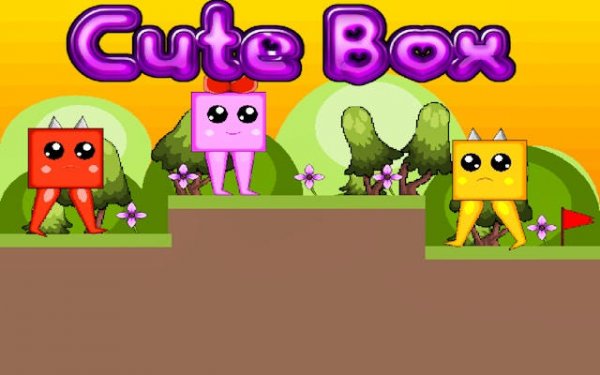
Little Block Blossom Run keeps its scope tight: run, jump, collect flowers, reach the flag. The progressive difficulty curve and checkpoint-based respawning make it welcoming for younger or casual players, while optional flower placements give experienced players a reason to replay stages. The retro pixel art is bright and readable, and the absence of power-ups or complex inputs keeps the focus on precision. The main limitation is that the input does not describe audio, level count, or multiplayer, so those expecting extensive content should note the game's deliberately simple design.
Little Block Blossom Run asks one clear thing of the player: move a small block character from the start of a side-scrolling stage to a red flag at the end. Along the way, flowers are scattered across platforms, gaps, and optional paths. The only actions available are running and jumping, so every decision comes down to timing and route planning rather than complex inputs. Stationary spikes and moving block-shaped enemies populate each stage, and players need to read the layout before committing to a jump. Being hit resets the character to a checkpoint without graphic feedback, which keeps the pace steady and the tone light.
Stages follow a progressive difficulty curve. Early areas introduce wide gaps and slow-moving enemies, giving players room to learn the jump arc and enemy timing. Later stages combine hazard types, so a single jump may require tracking an enemy pattern while clearing a spike pit. Flowers often sit on optional or risky paths, which means collecting all of them adds a completionist layer beyond simply reaching the flag. Reaching the flag unlocks the next stage, and the design avoids punishing difficulty, making it approachable for newcomers while still offering a reason for experienced players to replay for full flower counts.
The game uses a retro-inspired pixel art style with a bright, cheerful palette. Backgrounds rely on soft gradients and simple shapes that evoke classic 8-bit presentation without looking dated. Characters and obstacles are rendered in bold primary colors, which helps distinguish them during fast movement. The uncluttered presentation keeps attention on the action, and the lighthearted aesthetic supports short, low-pressure play sessions. Hazards are abstract geometric shapes rather than realistic threats, and enemies are blocky figures with predictable movement, reinforcing the family-friendly atmosphere.
A single jump button plus directional input covers every necessary action. There are no special abilities or power-ups to manage, which reduces cognitive load and makes the game easy to pick up. The design rewards careful timing and deliberate movement rather than fast reflexes, so it suits younger players, casual players, or anyone looking for a low-pressure platformer. No tutorial is required beyond a brief prompt. Because the game contains no violent or inappropriate themes, it fits well into a family gaming session or a short break during the day.



Comments
0 comments