
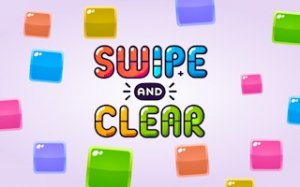
Color Match Puzzle: Swipe and Clear stands out from typical match-3 games by treating an isolated block as a level failure. That single rule shifts the focus from quick matching to full-board planning. The handcrafted levels and simple drag controls make it easy to start, while the restart condition keeps later boards demanding. It suits players who enjoy spatial reasoning and do not mind rethinking a move. The main limitation is that the input does not describe any multiplayer, story, or progression systems beyond increasing difficulty, so the appeal rests almost entirely on the puzzle loop itself.
Every level in Color Match Puzzle: Swipe and Clear gives you one job: remove all the colored blocks from the board. You do this by swapping adjacent tiles so that three or more identical colors line up horizontally or vertically. Matched blocks vanish, and the grid shrinks. The catch is that a single leftover block with no possible match resets the level, so clearing the board is not just about making matches—it is about making the right ones in the right order.
Controls are drag-based: you touch a block and drag it onto a neighbor to trade places. The game responds immediately, showing whether the swap creates a valid line. Because only adjacent swaps are allowed, each move is a small commitment. You cannot move a block across the board in one gesture, so planning means thinking about which neighbors to bring together and when. The interface stays out of the way, leaving the grid itself as the main source of information.
The restart condition changes how you approach the puzzle. Corners and edges are risky because blocks there have fewer neighbors to swap with. A color that gets stranded in a corner early can become impossible to match later. Strong play involves grouping similar colors before clearing lines, and checking the whole grid before each swap. Rushing a match that clears three blocks but leaves a lone tile elsewhere usually costs more than it gains.
Levels are handcrafted and increase in difficulty, so the puzzles are designed rather than randomly generated. That means later boards tend to demand longer chains of thought and more careful sequencing. The game suits players who like spatial reasoning and forward planning, and the simple drag controls make it approachable for short sessions or longer ones. It is a logic puzzle first, not a reflex test.


Comments
0 comments