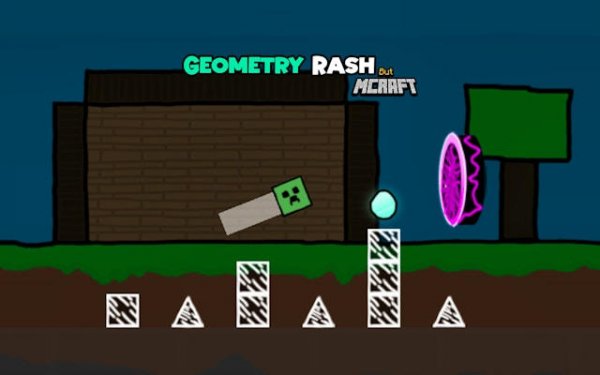
Cubic Path Explorer splits each stage into a fast precision section and a slow cart-navigation section, which keeps the pacing varied. The gem economy only buys visual upgrades, so skill remains the sole gate to progress. The gradual difficulty curve and auto-save make it friendly for short sessions, though players seeking intense challenge may find the early stages too relaxed. Its bright, blocky look suits a younger audience without talking down to adults.
Every stage in Cubic Path Explorer divides into two distinct sections. The first demands precision movement: you time jumps and dashes to clear gaps and avoid moving barriers. The second slows the pace, putting you behind a hovering cart that must be guided through winding corridors. This shift prevents the game from becoming a single-note reaction test. Instead, each stage asks you to switch between twitch timing and steady navigation, which keeps the overall rhythm unpredictable.
Luminous gems appear in both the fast and slow sections. They are not required to finish a stage, but they serve as the game's only currency. Collect enough and you can visit the in-game shop to buy alternative character appearances. Because the shop sells only visual changes, the core challenge stays skill-based. The gem system gives you a reason to replay earlier stages, hunting for missed pickups rather than just rushing to the exit.
Environments alternate between sleek, polished corridors and blocky outdoor areas. The bright, clean geometry and friendly color palette make the game approachable for younger players, while the tighter timing windows in later stages still offer a fair test for adults. This contrast between indoor and outdoor visuals also helps each level feel distinct, so you are not staring at the same backdrop for the entire run.
Early stages teach basic movement with simple obstacle patterns. As you progress, timing windows shrink and exploration paths grow more winding. The increase is gradual, with no steep spikes, and controls remain consistent throughout. That means you learn level layouts instead of memorizing complex button combinations. Stages are short enough for quick sessions, but the mix of fast and slow phases supports longer play. You can pause anytime without penalty, and progress saves automatically after each stage.





Comments
0 comments