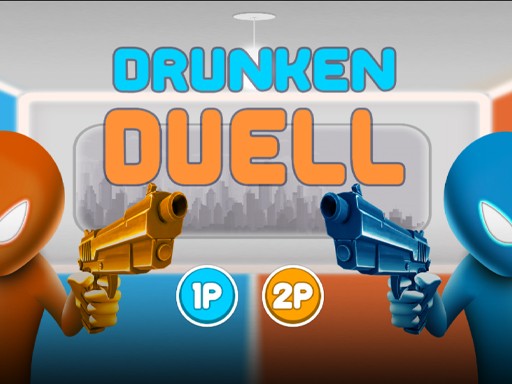
Wobbly Tumble 2 Player Arcade leans on a simple idea: one button, two rag dolls, and a physics engine that turns every press into a small gamble. The western theme and family-friendly tone make it easy to introduce to almost anyone, while the random-difficulty computer opponent offers a solo option. Its limitation is depth; the game is built for short bursts of local competition rather than long solo progression. Players who enjoy party games and shared-screen chaos will get the most from it.
Wobbly Tumble 2 Player Arcade pits two physics-driven rag dolls against each other in a western-themed arcade competition. The premise is straightforward: each match revolves around draining your opponent's energy meter before they drain yours. The rag dolls move with deliberately unpredictable, floppy physics, so every swing carries a degree of comic uncertainty. That instability is the core of the experience, not a flaw to overcome.
Control is limited to a single button. Pressing it makes your rag doll swing or shift position. Because the physics engine governs how that motion plays out, the same input can produce different results depending on timing and positioning. You are not memorizing combos; you are reading the moment and committing to an action. [IMG_1] This simplicity makes the game approachable for players who rarely pick up a controller, while the timing element gives it enough depth to hold attention across repeated matches.
Each game consists of five matches. When a player's energy resets to zero, the opponent earns a point. The first to reach five points wins the set. That structure keeps individual rounds short and the overall session moving, which suits the pick-up-and-play nature of the arcade format. There is no elaborate progression system described; the reward is the back-and-forth of the competition itself.
Two modes are available. In one-player mode, you face a computer opponent whose difficulty is randomly assigned, so the challenge level shifts between sessions. In two-player mode, you compete against a friend on the same device. The game is built around local multiplayer, making it a natural fit for shared screens and casual gatherings rather than online competition. [IMG_2]
Success comes from timing and observation. Landing hits requires pressing at the right moment, and watching your opponent's movement helps you anticipate their swings. Defensive patience matters as much as aggression, since avoiding hits is just as important as landing them. Because the physics produce erratic motion, learning to predict where a rag doll will end up is a skill that develops over multiple matches. Playing against a friend can expose you to different approaches and timing habits.






Comments
0 comments