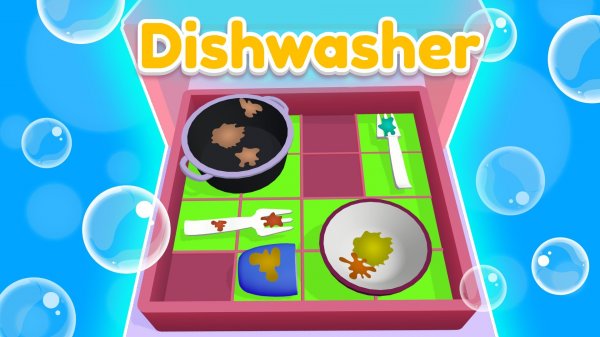
Kitchen Organizer Puzzle combines a simple spatial task with a broader reward loop. Fitting plates, glasses, cutlery, and pans into a dishwasher is the core challenge, and realistic physics make each placement feel physical rather than automatic. Coins from completed puzzles fund furniture, decorations, and clothing, giving the sorting a purpose beyond the level. Zen mode removes the timer, which suits players who prefer planning over speed. The main limitation is that the input describes only this dishwasher mechanic and customization layer, so anyone seeking combat, story, or multiplayer will not find it here.
Each level hands you a set of plates, glasses, cutlery, and pans that must fit inside a dishwasher. The challenge is spatial: items have different sizes and shapes, and realistic physics make them react as you place them. You cannot simply drop everything in one corner; larger pieces and awkward curves demand deliberate positioning. The goal is to fit every dish efficiently, and a successful arrangement pays coins.
Dragging with the left mouse button moves a dish to its spot. You can also navigate the kitchen with WASD or arrow keys, or by holding left-click and dragging the view. These controls keep the focus on placement rather than complex inputs, which suits the casual pace. Timed modes ask you to work quickly; zen mode removes the clock entirely, so you can organize at your own speed.
Coins earned from completed puzzles feed a separate customization layer. You can decorate your home with furniture and decorations, and buy stylish clothes for your character. This gives each sorting session a visible payoff beyond the puzzle itself. Upgrades and new items expand your design options over time, connecting the dishwasher challenge to a broader home-making activity.
Visualize the layout before you start moving pieces. Corners and edges of the dishwasher are useful for oddly shaped items that do not sit well in open space. Placing larger dishes first creates a stable frame, then smaller pieces fill the gaps. In timed modes, repeated practice improves speed; in zen mode, experimenting with different placements can reveal more efficient layouts and potentially more coins.





Comments
0 comments