logo GameNexus
Home Racing 2 Player Puzzles About
Sign In
My Profile Logout
  1. Home
  2. /
  3. Menu
  4. /
  5. Castle Card Tactics Defense
Castle Card Tactics Defense

Castle Card Tactics Defense

Developer: Gnome Core Creations
Updated: 2026-10-01
| Cards , Strategy , Defense , Deck Building , Family , Puzzle , Tactics
Cards Strategy Defense Deck Building Family Puzzle Tactics

Review

Castle Card Tactics Defense combines deck building with spatial reasoning in a multi-level castle setting. Its strengths are the clear card roles, the tactical layer of floor placement, and a progression system that unlocks higher floors without forcing a fixed ending. The lack of time pressure makes it approachable for families, while the depth of strategy and card synergies keep experienced players engaged. The main limitation visible in the input is the absence of a defined campaign conclusion, which may not suit players who prefer a clear finish.

About This Game

Core Loop and Player Goal

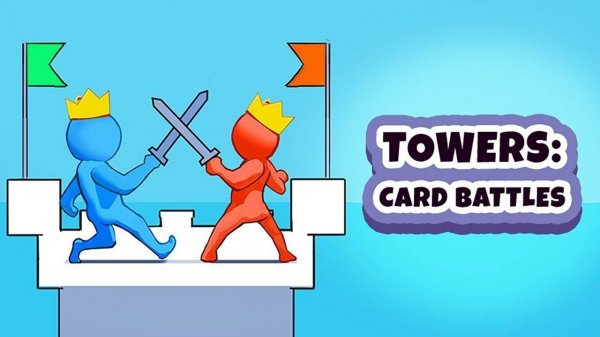
Castle Card Tactics Defense asks players to hold a multi-level castle against successive waves of enemies. Each attempt begins with a hand of fighter cards, and the player decides which cards to deploy and where to place them on designated spots inside the castle. Enemies approach from outside, so success depends on matching card strengths to the threats in each wave. There is no time pressure, which gives players room to think through every placement before committing.

Card Roles and Deck Building

Every card in a player's collection serves a specific purpose. Some cards deal consistent damage in direct confrontations, while others support nearby allies or slow approaching threats. A balanced deck usually mixes these roles, and players can customize their selection before each attempt to match expected wave patterns. The game does not force a single optimal build, so experimentation is part of the process. Over time, players may find synergies between certain cards that create stronger defensive formations.

Floor Placement and Wave Adaptation

Positioning is a tactical layer on its own. Cards placed on lower floors engage enemies first, while cards on higher floors may have a broader view but face delayed engagement. Waves can feature different enemy types, such as fast runners or heavily armored units, and observing those patterns helps players decide where to put their strongest defenders. Bonus cards can be activated during a wave to provide temporary advantages like increased attack speed or area damage. Timing those bonuses well can turn a difficult wave into a manageable one.

Progression and Replay Value

As players clear more waves, they unlock access to higher floors, which may introduce new card slots or tougher opponents. Each successful clear rewards new cards or upgrades, expanding strategic options. The game does not have a fixed ending; the challenge is to reach the highest possible floor. That structure encourages repeated play, since each attempt offers a chance to refine the deck and placement approach. Family-friendly visuals and straightforward rules make it accessible, while the depth of strategy keeps experienced players engaged.


Editorial Notes

Placement adds a second layer

Floor placement is not cosmetic. Lower floors engage first, while higher floors offer broader views but delayed engagement, so the same card can perform differently depending on where it stands.

No forced optimal build

The game explicitly avoids forcing a single optimal build, which supports experimentation and lets players adapt decks to expected wave patterns rather than memorizing one solution.

Bonus timing matters

Bonus cards provide temporary advantages like increased attack speed or area damage during a wave. Their value depends on timing, so saving them for the right moment can change the outcome of a difficult wave.

Open-ended progression

There is no fixed ending. The goal is to reach the highest possible floor, which shifts the focus from completing a story to refining deck and placement choices across repeated attempts.

Compatibility

✅ Works on PC & Mobile | Recommended: Chrome / Safari / Edge

Share:

Faq

Does Castle Card Tactics Defense require fast reflexes?
No. The game encourages thoughtful planning rather than fast reflexes, and there is no time pressure. Players can think through each decision carefully before placing cards or activating bonuses. That makes it more about reading wave patterns and managing deck composition than reacting quickly.
Can I customize my deck before each attempt in Castle Card Tactics Defense?
Yes. Players can customize their card selection before each attempt, tailoring the lineup to the expected wave patterns. The game does not force a single optimal build, so you can experiment with different mixes of damage, support, and slowing cards to find what works for your strategy.
What happens when I clear more waves in Castle Card Tactics Defense?
Clearing waves unlocks access to higher floors of the castle, which may introduce new card slots or tougher opponents. Each successful clear also rewards new cards or upgrades, expanding your strategic options. The challenge is to reach the highest possible floor rather than finish a fixed campaign.
How does floor placement affect combat in Castle Card Tactics Defense?
Cards on lower floors engage enemies first, while cards on higher floors may have a broader view but face delayed engagement. That difference matters when waves include fast runners or heavily armored units, because you need to decide where your strongest defenders should stand to intercept threats effectively.
Are there bonus cards I can use during a wave in Castle Card Tactics Defense?
Yes. Bonus cards can be activated during a wave to provide temporary advantages such as increased attack speed or area damage. Using them at the right moment can turn a difficult wave into a manageable one, so timing matters as much as deck composition and placement.
Is Castle Card Tactics Defense suitable for families and younger players?
The game has family-friendly visuals and straightforward rules, which makes it accessible to a broad audience. The depth of strategy keeps experienced players engaged, but the lack of time pressure and the clear card roles mean younger players can also learn the basics without feeling rushed.

Comments

0 comments
U
User
★ ★ ★ ★ ★
Please login to post a comment.
Loading comments...

Related Games

Color Match Puzzle: Swipe and Clear
▶

Color Match Puzzle: Swipe and Clear

Puzzle , Logic , Block , Match-3 , Casual
Color Block Puzzle: Paint by Numbers
▶

Color Block Puzzle: Paint by Numbers

Puzzle , Brain , Fun , Challenging , Color , Grid , Relaxing
Color Block Puzzle Challenge
▶

Color Block Puzzle Challenge

Puzzle , Logic , Block , Strategy , Challenge , Spatial Reasoning
Untangle Puzzle: Logic Challenge
▶

Untangle Puzzle: Logic Challenge

Puzzle , Logic , Hyper Casual , Spatial Reasoning , Brain Teaser , Relaxing
Railway Puzzle: Train Connect
▶

Railway Puzzle: Train Connect

Puzzle , Brain , Match 3 , Train , Casual , Family-Friendly
Fruit Memory Match Puzzle
▶

Fruit Memory Match Puzzle

Memory , Puzzle , Brain Training , Family Friendly , Card Matching , Casual
Sort Match 3D Supermarket Puzzle
▶

Sort Match 3D Supermarket Puzzle

Puzzle , Brain , Engaging , Fun , Challenging
Twist Tactics - Puzzle Solver
▶

Twist Tactics - Puzzle Solver

Casual , Puzzle , Brain , Addictive , Mechanical , Strategy

GameNexus

  • Home
  • Racing
  • 2 Player
  • Puzzles
  • About
  • Terms of Use
  • Privacy Policy
  • Contact Us
  • Disclaimer

© 2026  GameNexus All rights reserved.

↑

Share this page

Copy the link below to share this page: