Color Block Puzzle Challenge is built for players who prefer thinking through a problem to reacting under pressure. The obstacle system—one-way, layered, locked, and frozen blocks—keeps the core mechanic from growing stale, and the gradual introduction of these elements gives newcomers room to learn. The lack of a timer reinforces the game's patient tone. Its main limitation is that the description does not clarify how many levels exist or whether any social or competitive features are included, so players seeking those elements should look for more detail.
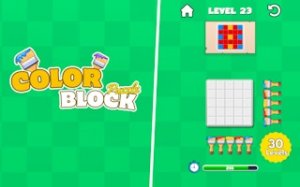
Every level in Color Block Puzzle Challenge asks the same fundamental question: how do you move each colored block to the exit that matches its color? Blocks slide across a grid, and the path is rarely direct. Because a single move can open one route while closing another, the game rewards players who study the board before acting. The challenge is not speed but foresight.
As players progress, the grid introduces obstacles that change how blocks can move. One-way blocks restrict movement to a single direction. Layered blocks must be cleared in a specific order. Locked blocks need a key before they will budge. Frozen blocks must be thawed before they can slide. Each obstacle type forces a different kind of planning, and later levels combine them so that solving one section depends on the order you tackle another.
On desktop, you click and drag blocks. On mobile, you tap and slide. The controls are designed to stay out of the way so that your attention stays on the puzzle. The learning curve is gentle: early levels introduce one obstacle at a time, giving players room to understand the mechanic before the next twist arrives. This structure makes the game approachable for beginners while still offering depth for experienced puzzle players.
There is no timer and no penalty for thinking. The game encourages you to trace a sequence in your head before making the first move. Sometimes the correct solution involves moving a block away from its exit temporarily to clear a path for another block. Recognizing that kind of indirect route is the core skill the game develops. Progress comes from patience and logical deduction, not from rushing.




Comments
0 comments