Sorting Challenge: Match and Combine works because its three core actions are not separate distractions. Matching, sorting, and merging overlap, so every move has a knock-on effect on the board. Separate modes change the pressure, with some emphasizing speed and others careful planning. The gentle presentation and intuitive controls make it approachable, while later obstacles prevent it from becoming mindless. It suits players who want a relaxed but focused pastime rather than a high-intensity challenge.
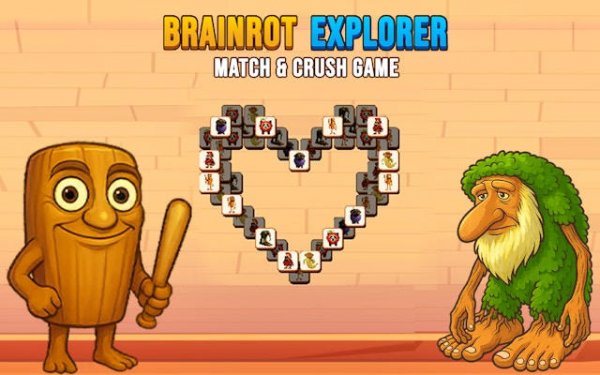
Sorting Challenge: Match and Combine revolves around three repeatable actions: matching similar icons on a grid, sorting items into correct categories, and merging objects to form new creations. None of these are isolated mini-games; they feed into one another. A match might clear space for a sort, and a successful sort might produce the item you need to merge. That overlap is what separates the game from a simple matching exercise. [IMG_1]
New mechanics are introduced gradually. Early arrangements are simple enough to read at a glance, so you can build confidence with the matching and sorting rules before the board becomes crowded. Later stages add obstacles that force you to adapt your usual order of operations. The difficulty curve is designed to rise steadily rather than spike, so improvement feels like a natural result of playing rather than a sudden wall.
Challenges are split into separate modes, each with its own objective. One mode may ask for quick sorting under time constraints, while another emphasizes careful merging to reach a specific goal. Because the modes change what counts as a good move, you cannot rely on one fixed strategy across the whole game. That variation is the main reason the core loop stays interesting after the first few sessions.
Input is limited to tapping or dragging items to their correct positions. Every action produces clear visual or audio feedback, so you can see the consequence of a choice immediately. Tutorials appear during early levels and explain new mechanics as they become relevant, which keeps the learning process embedded in play rather than separated from it. The design supports players of all ages and experience levels. [IMG_2]
Colorful environments are filled with quirky items and hidden surprises. Lighthearted animations reinforce successful moves, while background music and sound effects stay gentle. The art style avoids clutter, which matters in a sorting game because you need to track objects quickly. The overall tone is relaxed, but the planning required keeps it mentally engaging rather than passive.



Comments
0 comments