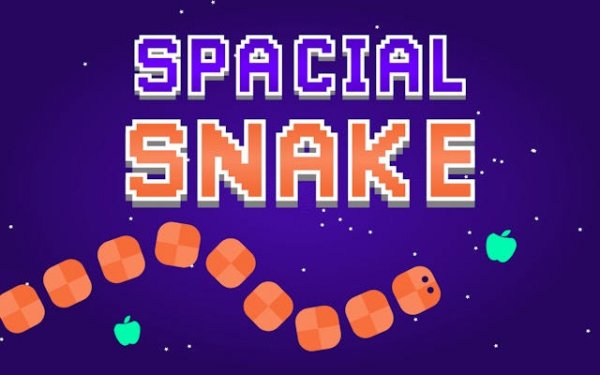
Cosmic Trail: Starfield Puzzle takes the familiar grow-your-trail formula and adds a hunger meter that drains over time. That single mechanic changes everything: you can't just circle safely, and distant orbs become genuine gambles. The starfield presentation and simple controls keep it approachable, while random orb placement and score resets give it strong replay value. Best for players who enjoy score-chasing puzzles with a strategic clock.
The core loop in Cosmic Trail: Starfield Puzzle is simple to grasp: direct a bright, moving line across a dark arena dotted with stars. Floating orbs appear at random positions. Each one you collect lengthens the trail and raises your score. The catch is self-collision—touching any part of your own growing trail ends the run. That single rule turns every orb into a spatial calculation. Early on, the trail is short and forgiving. As it stretches, the arena feels tighter, and the order you collect orbs matters as much as your reflexes.
A hunger meter sets this game apart from standard trail-growth puzzles. It decreases steadily from the moment a session begins. If it empties, the session ends regardless of your score. That ticking resource changes how you approach the board. A distant orb might be worth more points, but reaching it costs time you may need to refill the meter. Closer orbs are safer but often less rewarding. The result is a constant trade-off between risk and survival, and it keeps each round tense without relying on enemies or timers.
Controls are intentionally straightforward—typically arrow keys or swipe gestures—so the challenge comes from planning, not from learning complex inputs. The trail glows softly against the starfield backdrop, which shifts as the player moves. That visual contrast keeps the trail readable even when the arena gets crowded. The calm cosmic setting and retro arcade structure make the game approachable for a wide range of ages and skill levels, though the hunger meter adds pressure that casual players will notice quickly.
Each run resets the score, so the goal is beating your personal best. Because orbs spawn randomly and the hunger meter forces different route choices, no two sessions unfold the same way. Longer trails demand sharper reflexes and better planning, and the hunger system prevents players from simply circling a safe area. That variability gives the game strong replay value for players who enjoy score-chasing arcade puzzles with a strategic twist.





Comments
0 comments