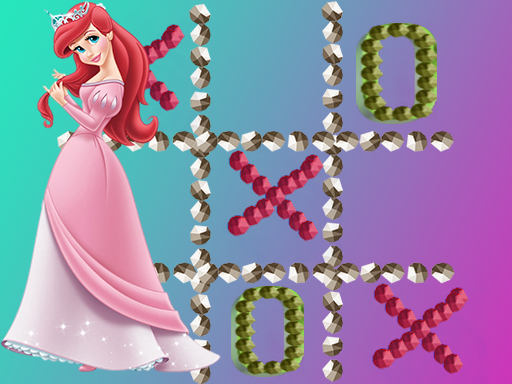
Princess Tic Tac Toe Puzzle doesn't try to reinvent the grid. It keeps the classic 3x3 rules intact and adds a princess theme, responsive sound effects, and a clean interface that works for children and adults alike. The two-player local mode and friendly AI cover the main ways people play tic-tac-toe. The main limitation is depth: there are no new mechanics beyond presentation, so it's best suited for short, relaxed matches rather than long sessions.
Princess Tic Tac Toe Puzzle keeps the rules of tic-tac-toe exactly as you remember them: two players alternate placing Xs and Os on a 3x3 grid, and the first to line up three marks horizontally, vertically, or diagonally wins. What changes is the presentation. The board and background carry a princess theme, with colorful visuals and sound effects that respond to each move. Those touches don't alter the strategy, but they give the game a lighter, more welcoming feel than a plain grid on a white screen.
You can play against a friendly AI opponent in single-player mode, or hand the device back and forth in the two-player mode. Both options use the same simple input: click or tap an empty square to place your mark. There's no timer, no complex menu, and no penalty for taking your time. The game highlights the winning line when someone gets three in a row, and a quick restart button lets you begin another round immediately. That loop—place, react, restart—is the whole experience, and it's designed to stay out of your way.
Because the grid is small, every move matters. Taking the center early gives you more possible lines to complete, so it's usually worth claiming if your opponent doesn't. After that, watch for two-in-a-row threats and block them before they become three. Building your own lines in more than one direction at once makes it harder for the other player to shut you down. These aren't hidden tricks; they're the same patterns that make tic-tac-toe a useful exercise in basic planning. The princess theme doesn't change the math, but it does make losing a round feel less serious.
This version is built for quick, low-pressure matches. Children can enjoy the bright visuals and simple controls, while adults can use it as a short break or a way to pass a few minutes with someone nearby. The interface avoids clutter, so there's nothing to learn before your first move. If you want a version of tic-tac-toe that feels a little more playful than a pen-and-paper grid, this one fits that role without adding rules you'd have to remember.


Comments
0 comments