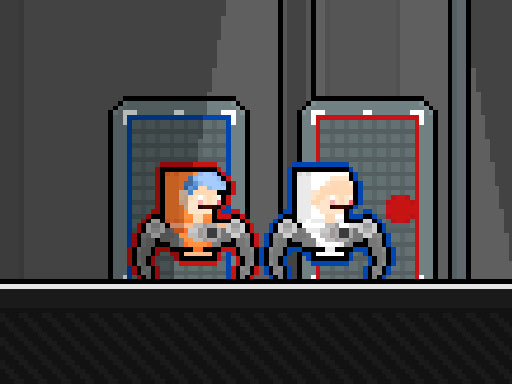
Robot Duo Puzzle Adventure stands out by making cooperation mandatory rather than optional. The alternating turn structure forces players to think about both robots, not just their own, and hazards like disappearing floors and spinning saws add timing pressure without a clock. Simple controls and browser availability lower the barrier to entry, while increasing level difficulty keeps the challenge meaningful. It suits friends, siblings, or family members who want a lighthearted puzzle that depends on teamwork.
In Robot Duo Puzzle Adventure, two players share control of the action, but not simultaneously. One player moves their robot, then the other. This alternating structure turns every level into a conversation: each move changes the board for the partner, so planning ahead means thinking about both robots, not just your own. The turn order also removes time pressure, letting players study the maze before committing to a direction.
Each stage is a maze that ends at a single exit door. Standing between the robots and that door are disappearing floors and spinning saws. Disappearing floors force quick, deliberate movement—hesitate and the path may vanish. Spinning saws block routes and demand timing, since a robot must pass when the blade is clear. Because players act in sequence, one robot's safe passage can depend on where the other robot is standing or which route it cleared first.
Robots are guided with arrow keys or on-screen controls, and the game runs in desktop and mobile browsers. No time limits are imposed, which keeps the focus on observation and sequencing rather than reflexes. That combination—simple inputs, no clock, and turn-based pacing—makes the game approachable for younger players, siblings, or friends looking for a light cooperative challenge.
Levels grow harder as the game progresses, asking for tighter coordination and more careful timing around hazards. Early stages teach the basics of alternating moves and reading the maze; later ones combine disappearing floors and saws in ways that punish rushed decisions. Success depends on both players acting in harmony, which is what separates this from solo puzzle games.



Comments
0 comments