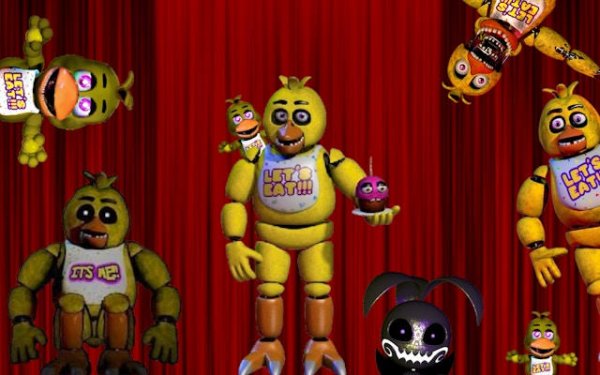
Overnight Facility Supervisor appeals to players who enjoy planning and observation over reaction speed. Its strength lies in the tension between limited power and multiple demands, forcing constant prioritization. The predictable character routines reward learning and adaptation across nights. However, the game's reliance on audio cues and routine monitoring may feel slow for those seeking action. Best suited for fans of tactical survival games who value resource management and methodical decision-making.
Overnight Facility Supervisor puts you in a security office with a bank of camera feeds. Each feed shows a distinct area: a music box that needs occasional winding, a stage where a character may start moving, and a vent monitor that lets you close a door when movement is detected. Your job is to watch these feeds, recognize what requires attention, and respond before small disruptions become failures. The game emphasizes planning and observation over sudden reactions.
Characters appear throughout the night with predictable behaviors. Some approach the office door; using a security mask makes them leave, but overusing it can draw more attention. A shadowy figure may appear after you check cameras, and you must watch it until it fades. Plush toys sometimes appear and need to be cleared by hovering over them. Learning these patterns lets you prioritize tasks and conserve resources instead of reacting to every event.
Every action—checking cameras, using the mask, closing the vent door—consumes power. Audio cues provide early warnings about character movements, so you can act without constant visual monitoring. The core challenge is deciding when to use tools and when to rely on observation. Balancing power usage with task completion rewards players who anticipate needs and act efficiently.
The game features multiple nights, each increasing in difficulty. Early nights introduce basic mechanics and character patterns, while later nights add more complex routines and tighter resource constraints. This progression encourages repeated play to refine strategies and learn from mistakes. Each night functions as a new puzzle, requiring adaptation and improved decision-making.
The quiet security office setting creates a focused atmosphere. Audio cues are essential for staying informed about off-screen events, such as footsteps that signal character movements. The visual design is clean and functional, with camera feeds providing clear information without clutter. Sound builds tension and delivers critical information, making it a key part of the strategic experience.






Comments
0 comments