
Pixel Us Red and Blue 2 Cooperative Journey does one thing clearly: it makes two people rely on each other. The split keyboard controls and the rule that both aliens must reach the flag prevent one player from carrying the other. Creature patterns add pressure without graphic content, and the pixel art keeps the mood light. The main limitation is that solo players are excluded entirely. For siblings or friends who enjoy talking through timing and routes, the game offers a consistent, family-friendly challenge.
Pixel Us Red and Blue 2 Cooperative Journey is built entirely around a single shared objective: get both the red and blue alien to the flag at the end of each level. One player uses the arrow keys, the other uses WASD. The split control scheme means neither player can finish alone. Every jump, pause, and route choice must be timed with the other person. If either alien is caught by a roaming creature, the level restarts for both. That rule creates immediate stakes without punishing anyone unfairly.
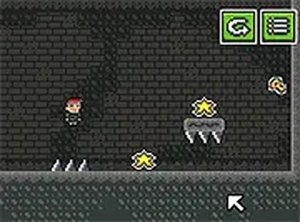
Creatures patrol the pixel environments and serve as the main obstacle. They are not designed to be frightening; they function as moving hazards that demand observation. Each level introduces new arrangements that test communication. You might need one player to lure a creature away while the other crosses, or both to jump on a narrow platform at the same moment. The difficulty rises gradually, so the core loop stays the same while the timing windows tighten. [IMG_1]
The control scheme is deliberately minimal. Arrow keys and WASD cover all movement, and there are no complex button combinations to memorize. That simplicity makes the game easy to hand to a sibling or friend who does not play often. The pixel art uses bright, contrasting colors so the two aliens remain easy to track on screen. Because both characters share the same screen, there is no camera splitting or hidden information. Everything relevant to a decision is visible to both players at once.
This game suits pairs who want a shared challenge rather than a competitive one. The design rewards patience and clear verbal cues. Players who prefer solo experiences will not find a single-player mode described here, and those looking for fast reflexes alone may find the pacing slow. The appeal comes from small, repeated moments of coordination: calling out a creature's position, counting down a jump, and reaching the flag together.




Comments
0 comments