
Classic Billiard Pool Game trades rule complexity for accessibility. Two players split the red and yellow balls, then alternate shots using only angle and power controls. Predictable physics lets you plan rebounds and cue ball position without learning spin mechanics. Short match length and minimal rules make it easy for newcomers, while shot sequencing still rewards experienced pool players. The main limitation is scope: the input describes no solo mode, no rule variations, and no confirmed online matchmaking, so it functions best as a light head-to-head distraction rather than a deep billiards sim.
Classic Billiard Pool Game is built around a single head-to-head format. One player takes the red balls, the other takes the yellow, and turns alternate after each shot. The win condition is straightforward: clear your assigned group before your opponent clears theirs. There is no shot clock, no complex foul system, and no rulebook to memorise, so the entire match rests on how well each player reads the table and executes their turn.
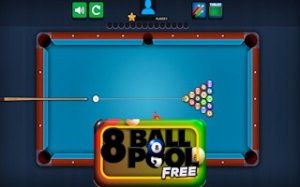
Controls are limited to two decisions per shot: angle and power. You set the cue direction, choose how hard to strike, and the cue ball travels according to a simple physics model. Because ball movement stays consistent, you can estimate rebounds off the cushions and plan two or three shots ahead. [IMG_0] The lack of spin controls or advanced cue techniques keeps the focus on positioning rather than mechanical mastery, which suits the hypercasual format.
Every turn begins with a fresh assessment. Cluster patterns, cushion angles, and the cue ball's resting position all shape which shot is worth attempting. A careless pot can leave your opponent a clean line on one of their balls, so defensive placement matters as much as accuracy. Pocketing balls in a sensible order reduces the risk of handing over an easy turn, and patience tends to outperform rushed attempts.
Matches are designed to finish quickly, which makes the game easy to pick up in short breaks. The two-player requirement means it works best as a shared activity, whether on the same device or across turns. Newcomers can compete immediately because the rules are visible from the first shot, while experienced pool players still find value in cue ball control and shot sequencing. [IMG_1]





Comments
0 comments