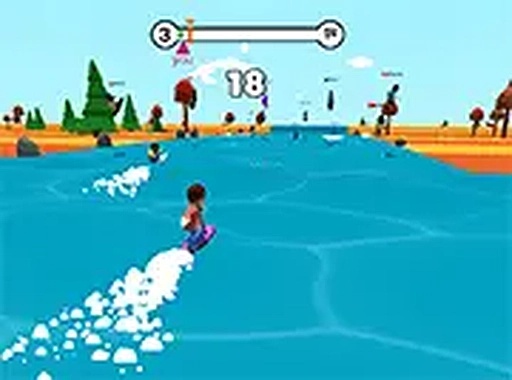
Wave Rider Speed Challenge
Review
Wave Rider Speed Challenge succeeds by focusing on a single, well-executed mechanic: the timing of aerial flips and landings. The controls are tight, and the feedback from a perfect landing is genuinely rewarding. The track design gradually introduces complexity, teaching players to read the environment. The visual style is bright and appealing, making it suitable for all ages. While the game does not offer deep customization or a story mode, its pick-up-and-play nature is a strength. It is an ideal choice for short gaming sessions where you want a quick dose of skill-based fun.
About This Game
Racing Through Dynamic Seascapes
Wave Rider Speed Challenge places players on a surfboard racing across a series of visually distinct ocean tracks. Each course presents its own set of natural obstacles, such as rocks, coral reefs, and shifting currents. The environment changes as you progress, keeping the visual experience fresh. The game’s art style uses bright, saturated colors and smooth animations to create an inviting atmosphere. Players must learn the unique layout of each track to anticipate upcoming hazards and plan their path accordingly. The sense of speed is enhanced by the fluid camera movement and the sound of rushing water.
Core Mechanics: Flips and Landings
The central gameplay loop revolves around performing flips while airborne and executing clean landings. When your surfer launches off a ramp or wave, you can rotate the board in the air. The key to maintaining speed is to land perfectly flat on the water. A successful landing gives a speed boost, while a poor landing slows you down. This system rewards precision and timing over reckless button mashing. Players must judge the height and distance of each jump to decide how many flips to attempt. The controls are responsive, allowing for quick adjustments mid-air.
Strategic Use of Boosters
Scattered throughout each track are special boosters that provide a temporary speed increase. These are best saved for straight sections of the course where you can maximize their effect without crashing. Using a booster just before a sharp turn can lead to a wipeout, so careful planning is required. The game encourages players to memorize booster locations and integrate them into their racing strategy. This adds a layer of tactical depth beyond simple reaction time. Learning when to activate a booster versus when to focus on a clean landing is a skill that separates average players from top performers.
Character Selection and Visual Variety
Players can choose from multiple surfers, each with a distinct appearance but similar handling characteristics. The choice is primarily cosmetic, allowing players to pick a character that resonates with their personal style. The game’s visual themes shift from tropical lagoons to stormy coastlines, providing variety without changing the core mechanics. The consistent art direction ensures that each new environment feels like a natural extension of the world. This attention to visual detail helps maintain player engagement across multiple play sessions.
Accessibility and Replay Value
Wave Rider Speed Challenge is designed to be easy to pick up but difficult to master. The simple control scheme makes it accessible to younger players and those new to arcade racing games. At the same time, the scoring system and leaderboards encourage repeated attempts to improve times and scores. The game runs directly in a web browser with no download required, making it convenient for quick gaming sessions on a desktop computer. The combination of multiple tracks, characters, and a skill-based scoring system gives the game strong replay value.





Comments
0 comments